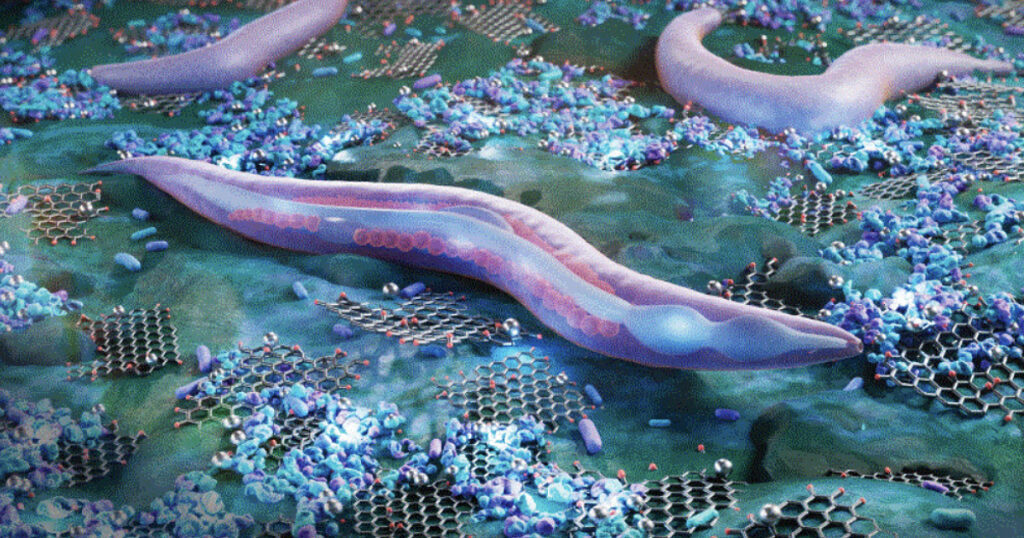
The most surprising discovery occurred when the researchers combined graphene oxide with silver ions. The analyses showed that the formation of the ecocorona significantly increased the ability of graphene oxide to associate with silver. This result, combined with the greater accumulation of the metal observed in the organisms, helps explain the “Trojan Horse” effect identified in the study.
The effects were observed in different parts of C. elegans. The combination caused intestinal, neuronal, and reproductive alterations. It was also the treatment that caused the most destruction of the nematode’s reproductive cells, even at lower concentrations of silver.
In addition to the effects observed, the study has implications for the process of assessing nanomaterial safety itself. Since E. coli is routinely used as food in C. elegans assays, disregarding its interaction with the tested materials may influence the interpretation of the results. The findings reinforce the importance of considering these interactions in the design and interpretation of nanotoxicity studies, contributing to more robust assessments in the development of protocols, technical standards and regulatory provisions.
The study was conducted by CNPEM in collaboration with USP’s Center for Nuclear Energy in Agriculture, the C. elegans group of the Federal University of Pampa (Unipampa), and the Environmental Nanoscience group of the University of Birmingham, in the United Kingdom, with financial support from the Coordination for the Improvement of Higher Education Personnel (Capes), the National Council for Scientific and Technological Development (CNPq), and the São Paulo Research Foundation (Fapesp).
The article Caenorhabditis elegans in nanosafety research: dual effect of Escherichia coli ecocorona formation on single and combined toxicity of graphene oxide is available online.
*Written with information provided by the CNPEM Communications Office
English version: Nexus Traduções, edited by Denis Pacheco
Sobre o Autor